Finding a flat is hard. Finding good flatmates is even harder. A good living situation can turn a modest flat into a home; a bad one can make even the nicest place unbearable. The key is to choose wisely before signing — not trying to fix problems after the fact.
This guide gives you the practical tools to choose well: what to ask, what signs to look for, and how to use Hommis's match system to connect with people who genuinely fit.
Why we get it wrong when choosing flatmates
Most flatmate problems don't come from bad people — they come from incompatible expectations and habits that nobody asked about in time:
- One person is an early riser, the other goes to bed at 3am.
- One cleans every week, the other "when it gets to it".
- One prefers quiet, the other has friends over several times a week.
- One pays rent on the 1st, the other is always late.
None of these conflicts is unforgivable on its own, but if nobody talks about them before moving in together, they become a daily source of tension.
The questions to ask before deciding
A sincere 20-minute conversation can save you months of friction. These are the questions that reveal the most:
About schedules:
- What time do you usually get up and go to bed on weekdays?
- Do you work from home or in an office?
- Do you have irregular shifts or active weekends?
About cleaning:
- How do you handle cleaning? Do you have a fixed routine or do it as needed?
- What level of tidiness do you find comfortable in shared spaces?
About social life at home:
- Do you often have guests over? How often?
- Do you host parties or gatherings at the flat?
About shared finances:
- How do you prefer to manage shared bills (water, electricity, internet)?
- Have you shared a flat before? What worked and what didn't?
About personal needs:
- Do you have any allergies, dietary requirements, or important personal rules?
- Do you have or plan to get a pet?
You don't need to interrogate anyone — but touching on these points naturally in conversation means both of you have a much more realistic picture of each other before committing.
Red flags you shouldn't ignore
These behaviours during the search often signal problems later:
Evasiveness about concrete questions: If someone answers "I'm very flexible about everything" to every question without giving specifics, they're probably not being entirely honest. Real flexibility shows up in concrete answers, not generic statements.
Last-minute cancellations: If someone cancels the viewing three times, arrives very late without apologising, or doesn't reply to messages for days, that behaviour isn't going to improve once you share a flat.
Excessive pressure to close the deal quickly: "Tell me today or I'll rent it to someone else" is a sign of artificial pressure. Good flatmates don't need to pressure you into deciding.
Obvious lifestyle mismatches: If you work night shifts and the other person hosts parties at weekends, you don't need to dislike each other for it to be a problem.
Speaks badly of all previous flatmates: If they say "I had problems with all my previous flatmates", the common variable is that person.
How Hommis's match system improves the selection
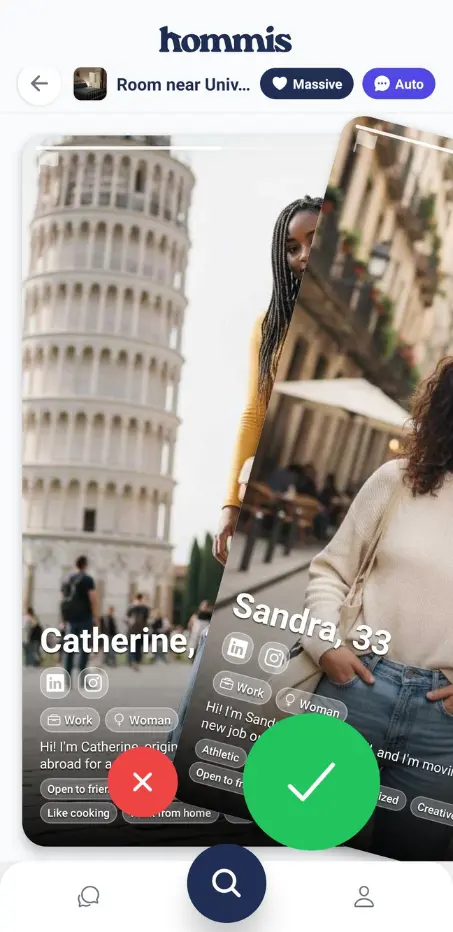
The big advantage of finding flatmates with Hommis is that the match filters the contact: you only talk to people who've already shown interest in living with you (or renting you their room). That eliminates the typical noise from Facebook groups or listing portals where you send 20 messages and get 2 replies.
How the process works on Hommis:
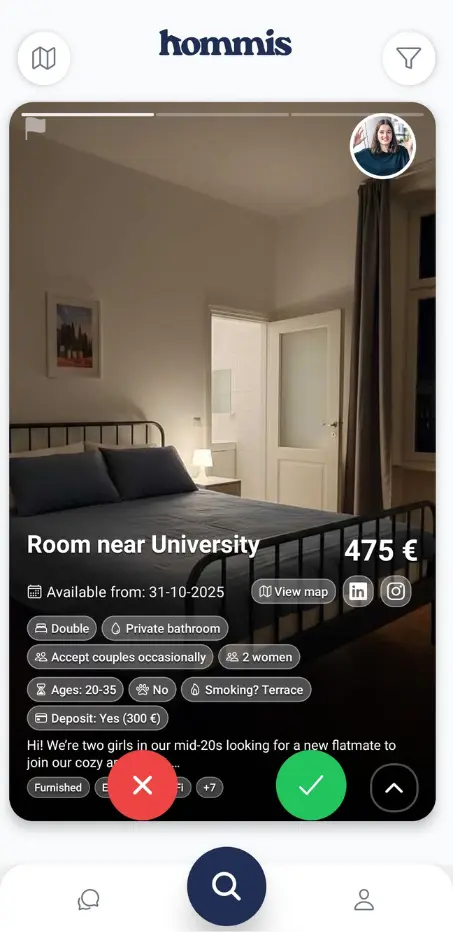
- Complete your profile with a photo and a short description: who you are, what kind of living situation you're looking for, rough schedule, and area. The more complete, the better the match quality.
- Swipe on the profiles that seem compatible.
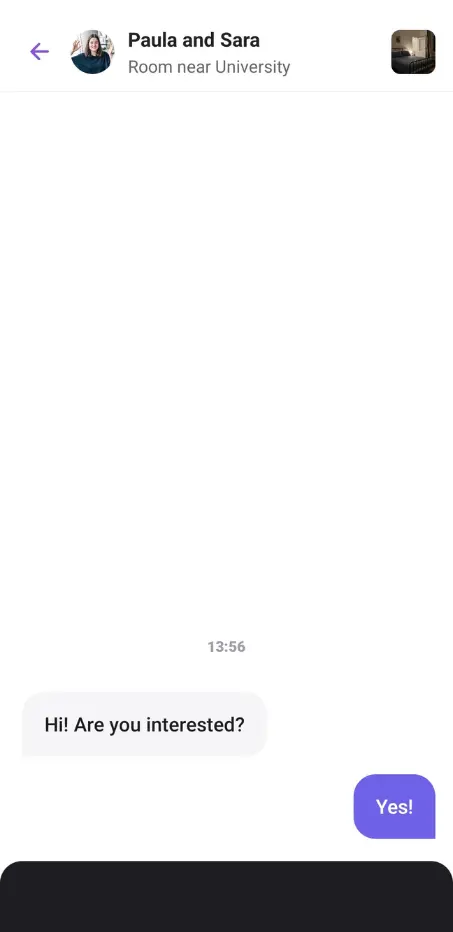
- When there's a mutual match, the chat opens. From there you can dig into the key questions before meeting in person.
- Meet in person or have a video call to check that the chemistry works in real life.
The visible profile means both parties know something about the other person before the first message. That completely changes the quality of the initial conversation.
The viewing: what to check
When you've spoken with someone and they seem like a good fit, visit the flat (in person or by video call) and take the opportunity to:
- Meet the current flatmates if there are any: what's the atmosphere like between them?
- See the real state of the flat: cleanliness, rooms, bathroom, kitchen, shared spaces.
- Ask about the actual bills, not just the rent.
- Review the contract before signing: does it include your name? Duration? Exit conditions?
A well-used 30-minute visit is worth more than weeks of messages.
If the living situation isn't working
Sometimes, even if you chose well, circumstances change. If there's tension:
- Direct conversation without drama: Most flatmate conflicts are resolved by speaking clearly. "Hey, I find it hard to sleep when there's noise after midnight" is much more effective than building up resentment for weeks.
- Set rules in writing: If something causes recurring conflict (cleaning, bills, guests), suggest writing it down together. An informal agreement over chat already helps.
- Know when to leave: If there's no possible solution, review your contract to understand when and how you can leave without legal or financial complications.
Sharing a flat is one of the smartest ways to live in an expensive city. With the right flatmate, it can even be an experience that enriches your life. With the wrong one, it can be a very long year. Choosing well from the start is always the best investment of time.
Download Hommis on the App Store or Google Play and start finding your ideal match.